“Unless you were born here, you will never really be at home in this city.” Amy and I heard those words (or a variation thereof) over and over again in early 1996, as we met new people in our adopted hometown of Rockford, Illinois. We continued to hear them occasionally through the years; the last...


Category: The Rockford Files
Post
Man Up
Mike Madigan (so the rumor goes) will never leave the Illinois House of Representatives, or even risk vacating the speaker’s chair, because doing so would almost certainly set him on the path trodden by four of the last eight governors of Illinois. As long as Speaker Madigan stays in a position where he can leverage...
Post
Economy and Independence
The president of the little village in West Michigan where I was born and raised (Spring Lake, population 2,360, sal-ute!) no longer wants to be village president. The obvious solution to this conundrum seems to have eluded the 84-year-old Joyce Verplank Hatton. Rather than resign the office, President Hatton has decided to take the road...
Post
Rockford in the Springtime
I first entered Rockford the way that most people do when they’re coming from the east, taking the exit off I-90 onto East State Street, where the ramp T-bones into the Clock Tower Resort and Conference Center, now closed for good but then, in November 1995, still home to “the world’s most comprehensive collection of...
Post
Power to the People!
The world is broken. There was a time when those words would have been considered unremarkable—a truism, even. Of course the world is broken: Our first parents, Adam and Eve, broke it. They did so by their sin. They had everything that any man or woman could ever reasonably want: a paradise to live in,...
Post
A Man of the People
Only where love and need are one, And the work is play for mortal stakes, Is the deed ever really done For Heaven and the future’s sakes. Long-time readers of Chronicles may recall that this column bore a different rubric when it first appeared in the January 2001 issue. The initial mission of the Letter...
Post
Why Fake News Matters
Fake news, as I discussed last month (“Faking It,” The Rockford Files), is a very real problem, though less for the reasons commonly given (the potentially destructive effects it may have on our “democracy”) and more for the fact that it both flows from a lack of concern for truth (and thus says something about...
Post
Faking It
If one were to believe the mainstream media—and who doesn’t believe the mainstream media?—Donald J. Trump will be inaugurated as the 45th President of these United States this month because over 60 million Americans are unable, and possibly unwilling, to tell the difference between true, objective reporting, filled with facts and designed only to help...
Post
Taking Back the Culture
By the time you read this, “the most important election of our lifetime” will be headed for the history books. If the last six most important elections of our lifetime are any indication, however, we will once again have a chance to vote in the most important election of our lifetime in 2020. Or perhaps...
Post
Our Corner of the Vineyard
Nolite confidere in principibus. The voice of the Psalmist speaks to us down through the ages: “Put not your trust in princes: In the children of men, in whom there is no salvation.” We can be forgiven if we find those words more relevant than usual in this particular election year. But it would be...
Post
Incalculable Rewards
Do not conform yourselves to this age but be transformed by the renewal of your mind, that you may discern what is the will of God, what is good and pleasing and perfect. —Romans 12:2 While Mother Teresa was still alive, few who knew of her doubted that she would eventually...
Post
Of Sam and Siddiqui
“You know,” he said, “I wouldn’t have let your family in, either.” Standing in a conference room at the Congress Hotel in downtown Chicago, Sam held my gaze in that sideways glance of his, waiting to gauge my reaction. “I understand,” I said. “And I agree. You shouldn’t have. But I’m here now, so let’s...
Post
Islam, Period
“The beginning of wisdom,” Confucius said, “is to call things by their proper name.” Donald Trump’s aphorisms are unlikely to make their way into fortune cookies, much less to go down in history, but on this point he and the great Chinese sage would seem to agree. In the wake of Omar Mateen’s massacre of...
Post
Trump and the Stakes of Power
My undergraduate and graduate degrees are both in political science, but the chief work that helped me to understand the practice of politics is one of history: The Stakes of Power: 1845–1877, by Roy F. Nichols. Political science shares with sociology a bias toward presentism, describing political structures as they currently exist with no sense...
Post
The Ties That Bind
I bought my wife tickets to a Bruce Springsteen concert for Christmas. This may sound like the stereotypical man-gift—a present a husband bestows on his long-suffering spouse because he wants it for himself, like a riding lawn mower—but Amy really did want to see The Boss in concert again. Twenty-eight years ago, in our sophomore...
Post
Burning Bright in the Darkness
I have learned, in whatsoever state I am, therewith to be content. To discover, at his memorial service, that Dr. John Addison Howard’s favorite verse of Scripture was Philippians 4:11 came as no surprise to anyone who knew him well. Those who had simply met him once or twice, or never...
Post
Sophistory
Two thousand fifteen was the year that we Americans broke history. By “breaking history,” I do not mean something like “breaking news,” or “breaking records,” or even “breaking the Internet” (though the Internet certainly played a role). Yes, the “historic moments” of the Summer of #LoveWins and #HateLoses—the U.S. Supreme Court’s decision in Obergefell v....
Post
#CallMeMilton
Like most individuals my age who have both X and Y chromosomes and a conventionally male sexual organ, I was assigned a specific identity at birth. I obviously had no choice in the matter, though I can hardly blame the delivery-room doctor or my parents, since, in those benighted days, even the most enlightened members...
Post
Dig Deeper
In the cathedrals of New York and Rome There is a feeling that you should just go home And spend a lifetime finding out just where that is People understand catastrophes. The everyday ebb and flow of history, in their own lives and in the world, is much harder for them to grasp. That thought—hardly...

Post
It’s Just Business
A dozen years ago (give or take), I tried to commission a piece for Chronicles on how Big Business was increasingly pushing a leftist social and cultural agenda. For years, the conservative orthodoxy in the United States had been that capitalist institutions, from mom-and-pop shops up to the largest corporations, were essentially conservative. (In the...
Post
We Came to Fight the Jihad
If a Muslim prays in a mosque and nobody sees her, does Allah still hear her prayers? That question might seem more urgent than rhetorical for a certain Bosnian immigrant after Dr. Arshad Shaikh, the president of the Muslim Association of Greater Rockford (MAGR), told the Rockford Register Star on February 9 that “It would...
Post
Excessive Misery
I’m miserable. But if you paid attention to the national news or dialed up the Drudge Report in late February, you probably knew that already. How could I not be, sitting here in my office in downtown Rockford, Illinois? After all, according to Forbes, Rockford is the third most miserable city in the United States....

Post
Coming Home
It’s 10:01 p.m. in Florence, and seven hours earlier in Chicago. According to the live map on the back of the headrest in front of me, we’re somewhere over Canada, making a beeline for Sault Ste. Marie, still in the daylight, but rapidly losing ground. As we turn ever more to the south, the darkness...
Post
Meet Me at Mary’s Place
I got a picture of you in my locket I keep it close to my heart A light shining in my breast Leading me through the dark . . . The fog outside the window glows in the moments before dawn. The sun will soon rise, but I won’t be able to see it. The...
Post
The United States of Generica
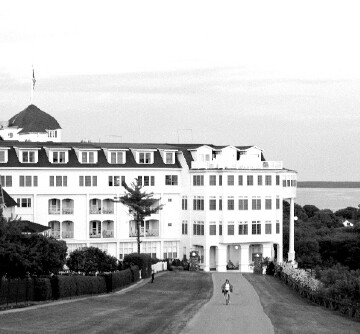
The scents of lilacs, fudge, and horse manure mingle to form the distinctive aroma of Mackinac Island in early June. The tourist season is not yet in full swing; it starts in earnest with the Lilac Festival, the first day of which will be our final day on the island. A mild winter and an...
Post
Stand My Ground
Purchasing a house in a city with double-digit unemployment and some of the highest property taxes in the country may well be a definition of insanity. Buying such a house on foreclosure, unable to make the purchase contingent on the sale of your current home, undoubtedly is. Yet here we are—considering taking that leap into...
Post
Looks Can Be Deceiving
Whoever came up with the liberal platitude that “Children have to be taught to hate” was either a liar or a fool, or both. He certainly never had children of his own, and, if it weren’t impossible, I’d say he must never have been a child himself. There was plenty of ethnic strife in my...
Post
That New Car Smell
“Why are all the cars in the Super Bowl ads 2013s, if it’s only February of 2012?” It’s the kind of question only a 12-year-old boy like Stephen would think to ask; the rest of us long ago became accustomed to model-year creep, as the automakers knew that we would. When I was Stephen’s age,...
Post
The Heart of Darkness
When the Vietnam War ended in 1975, over 58,000 Americans had lost their lives over the course of almost 20 years. Whatever one may think of the justice or prudence of the U.S. intervention in Southeast Asia, only the most callous of souls regards that loss of life with complete indifference. When the Northern Illinois...
Post
A Good and Faithful Servant
“MacKay.” I struggled for some time with how to render those six letters, in a vain attempt to convey some sense of what it was like to hear Pete pick up the other end of the phone line. I could never do justice to the experience. Somehow, Pete managed to stretch the two short syllables...
Post
Bread and Circuses
A real loaf of bread is not that hard to make. Flour, water, yeast—that’s all it takes. A little salt and oil may change the flavor and texture for the better, but you can make a better loaf than any you can buy in an American supermarket with just three ingredients and a little heat. ...
Post
The Gales of November
“You’re probably not going to like this,” David Dale Johnson said, “but I’m suggesting we ask the Board of Review to reduce the assessment by $30,000.” I had retained David as a hired gun in my attempt to get our house’s assessment, and thus our property taxes, lowered. David knows a thing or two about...
Post
Slip-Slidin’ Away
“Census data: Rockford may lose spot as Illinois’ 3rd biggest city” warned the headline in the online edition of the February 16 issue of the Rockford Register Star, announcing the initial release of data from the 2010 Census. Ten years ago, when the data from the last census was released, Rockford, with a population of...
Post
Free Fallin’
Rockford, Illinois, has lived through more than its share of economic downturns. The most notable, of course, was during the Reagan Recession, when one in four Rockfordians were unemployed. The city climbed up out of that trough, only to lose a number of its oldest and largest manufacturers through the frenzied rounds of mergers and...
Post
Oh I Wish I Was in Dixie
For a native son of the Midwest who has sympathized with the Southern states in the War of Northern Aggression for as far back as he can remember, I can see why some Southerners might find a certain justice in the impending fiscal collapse of the state that launched Abraham Lincoln, coming as it has...
Post
Bedpan Industry
You can tell a lot about the direction in which a city is headed by paying attention to the types of buildings being built, and those being torn down. Here in Rockford, for some years now, the latter have disproportionately been factories, including some which once made Rockford the manufacturing powerhouse of the Upper Midwest....
Post
A Tale of Two Cities
Of all the cities of which I have some personal experience, but to which I have no personal connection, Charleston, South Carolina, is the only one in which I’ve seriously thought I could live. The attraction is not the climate (my Polish and German genes and my Upper Midwest upbringing make me long for a...
Post
Starting at Ground Zero
Here in Rockford, as across the country, many Tea Party activists spent the latter part of the summer with their eyes figuratively fixed on the former site of the World Trade Center—or, rather, two blocks away. The controversy over the Ground Zero Mosque generated much sound and fury, but in the end, what did it...
Post
To Secede or Succeed?
Over a decade ago, Don Livingston organized a Liberty Fund Colloquium in Charleston, South Carolina. One of the sessions examined whether any movement toward political decentralization was possible without at least the threat of secession to back it up. On that subject, most of the attendees agreed: Whether one regards secession as good in itself,...
Post
Who’ll Stop the Rain?
Rebekah wants to be an algebra teacher. She announced this a few months ago, about the time she turned 15. “You do know,” I said, “to be an algebra teacher, you can’t just study algebra. You’ll have to be proficient in math at all levels, through calculus, including geometry.” Only six months before, she had...
Post
Walk Like an Egyptian
About the time that we moved into our current house, my grandmother gave me a pot of Egyptian walking onions. Winter hardy to Zone 3, they are perfect for Rockford, where many plants that are perennial in my native Michigan struggle to make it through our harsher winters. I’ll admit that I struggle a bit...
Post
Tea Bags: A Cautionary Tale
It almost seems like a dream, after all these years. Long before Barack Obama nationalized General Motors and enrolled the American people in involuntary servitude to Big Insurance and Big Pharma; before George W. Bush bankrupted the United States in a quixotic attempt to stamp out all evil and to secure the existence of the...
Post
You Say Ásátru, I Say Shoresh
In these days of political correctness and multiculturalism, the surprising thing is that there was so little controversy when the board of School District 205 awarded a $40,000 contract to revisionist historian Michael Hoffman, author of They Were White and They Were Slaves: The Untold History of the Enslavement of Whites in Early America and...
Post
Gloom, Despair, and Agony on Me
Deep, dark depression, excessive misery . . . That, according to Forbes.com, is what I should be feeling, but as a native Michigander, I find it hard to be miserable, let alone depressed, on a cloudless day in February. Even mere half-Poles are naturally pessimistic, but a blazing sun in a bright blue sky greatly...
Post
The Bubble Economy
“Why,” Sheila Ramus asked, “if there are so many pro-lifers here, does Rockford have an abortion clinic?” Sheila, my wife and I, and our pastor, Fr. Brian Bovee, were waiting to check in at Rockford’s annual Pro-Life Banquet. An hour before the dinner was scheduled to begin, the Holy Family Room (yes, that is its...
Post
A Hard Habit to Break
On Friday, December 18, 2009, some lucky person became the first motorist in over 35 years to travel a two-block stretch of Main Street in Rockford, Illinois. The ride must have lasted all of 60 seconds—perhaps 90, if he slowed down to view the handful of restaurants and storefronts that had, until a few months...
Post
Don’t Stop Thinking About Tomorrow
At the 1992 Democratic National Convention, Bill Clinton adopted Fleetwood Mac’s “Don’t Stop (Thinkin’ About Tomorrow)” as his unofficial theme song. Its bouncy, optimistic strains would be reflected in Clinton’s line, four years later, that “We do not need to build a bridge to the past, we need to build a bridge to the future.”...
Post
An Arresting Moment
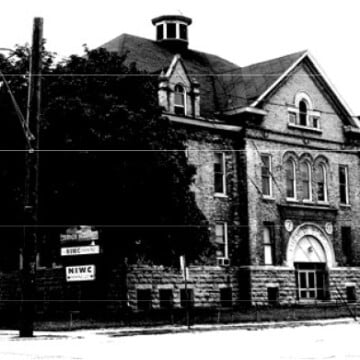
Five years ago, I wrote of the horror that Aaron Wolf and I experienced as we spent a morning photographing the old Turner School here in Rockford. Built in 1898, the massive brick-and-stone structure was closed 80 years later by a school board attempting in vain to avoid a lawsuit over busing. Today, little effort...
Post
A Cautionary Tale
When pro-life activist James Pouillon was murdered in Owosso, Michigan, on September 11, I read a few dozen accounts from both national and Michigan news sources and quickly decided I had a handle on the story. Harlan Drake, the man who has admitted to murdering Pouillon, seems deeply disturbed, and he had murdered another man...
Post
Coming Home
“The people who go to St. Stan’s aren’t Polish; they’re Polish-American.” Those words, blurted without thinking, have haunted me for almost a decade and a half. Anna Mycek-Wodecki, then art director of Chronicles, was a true Pole. Like Leopold Tyrmand, the founder of Chronicles, she was a refugee from communism. Unlike Tyrmand, she was ethnically...